

In most traditional industries, technology is something you buy from a vendor.
However, the next generation of market share leaders in the supply chain are not logistics companies that buy and implement technology; they are technology companies that utilize technical talent, big data, and AI to deploy software and hardware that help them out-operate traditional supply chain logistics operators.
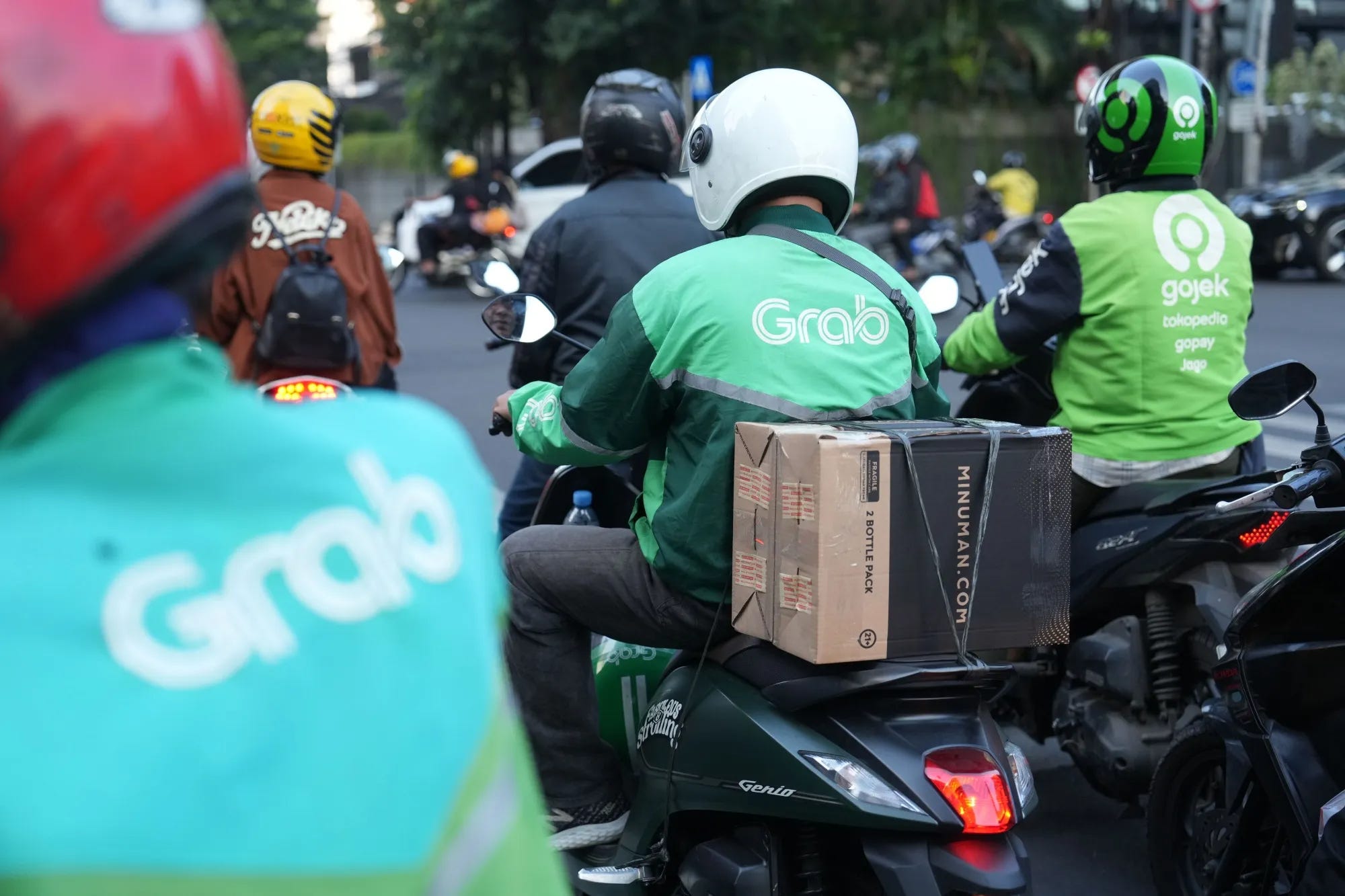
Let’s look at a few examples from adjacent industries, starting with ride-hailing. Taxi companies have long been well-established and entrenched. But they were no match for the Ubers and Grabs of the world that hired world-class technical talent in software, product, and design to develop software that completely changed the customer experience.
A slew of startups offering ride-hailing software to incumbent taxi companies popped up immediately to save them, but even they could not change the fact that traditional taxi companies did not live and breathe innovation and disruption. It was not in their DNA.
As a second example, let’s look at another adjacent industry: grocery retail. While the incumbents still remain exceptionally strong, challengers like Amazon in the US, Blinkit in India, and Grab in Southeast Asia, have already become impossible to overlook.
These technology companies have reimagined the entire grocery retail experience with direct-to-consumer apps, marketing and merchandising rooted in data, and the creation of a parallel supply chain centered around large distributed clusters of small micro-fulfillment centers and dark stores—and a delivery fleet larger than all of the employees of the traditional supply chain industry combined.
Often if you look at the amount of technology and R&D spend of a company you’ll see that tech-native companies tend to spend around 10-15% of their revenue on tech and R&D and the result is also higher compounded annual growth.
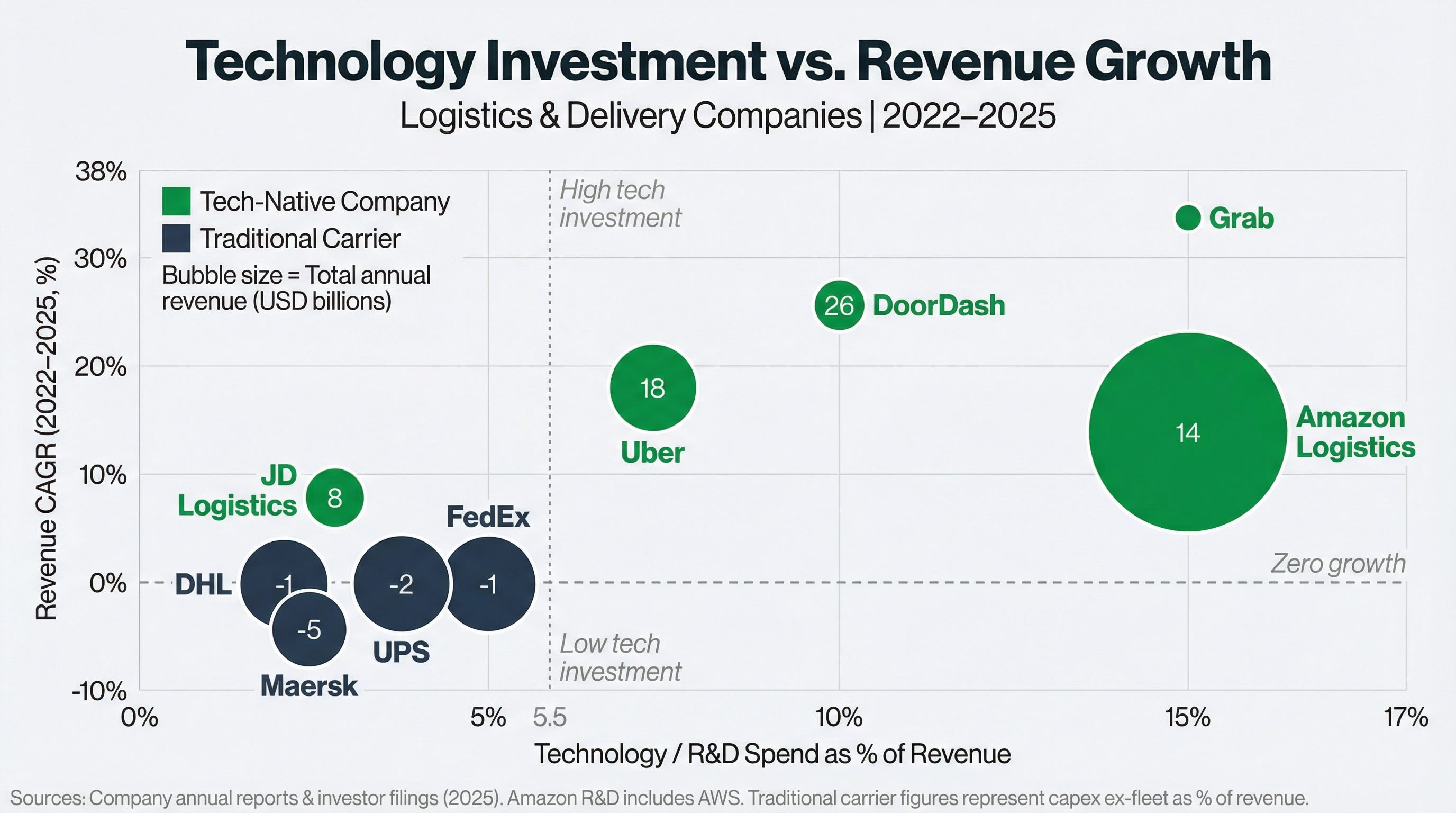
Traditional supply chain logistics has been harder to disrupt primarily because regulation provides a very strong moat, but the unfortunate by-product is that regulation rewards firms that focus on keeping competitors out while extracting the maximum value from customers, instead of innovating for the benefit of the customer.
There are signs that competent challengers are already arising in supply chain logistics, but rather than highlight them, let’s talk about what traditional supply chain and logistics companies can do about it.
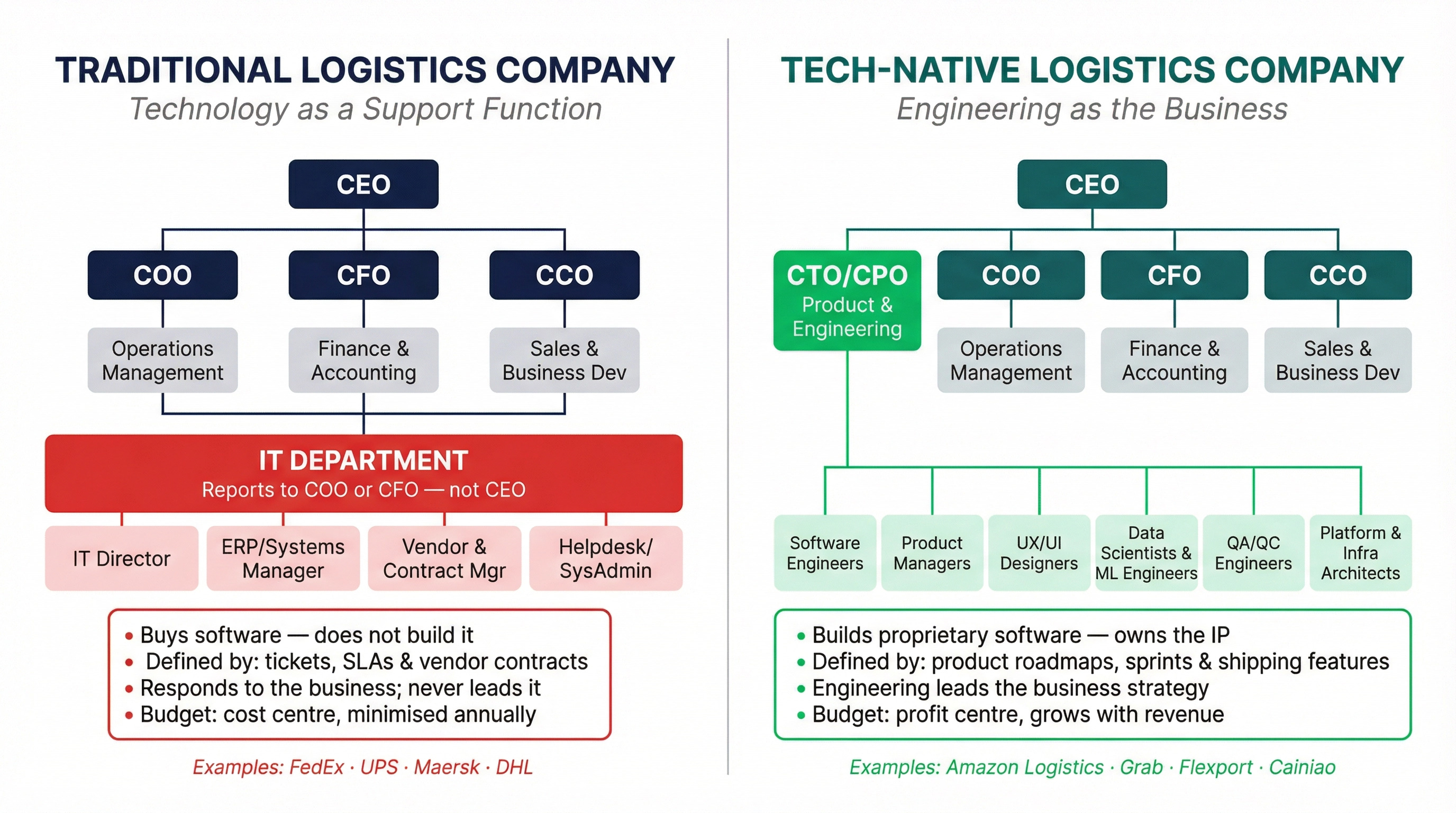
First, the culture needs to change, starting at the top. Management teams need to become highly technical, out-of-the-box problem-solvers. Next, R&D, engineering, and product teams should lead the business and operations, not the commercial teams.
Yes, this is very difficult, I know. What’s even more difficult is being a taxi company executive trying to compete with Uber.
This article first appeared in CargoNOW magazine