

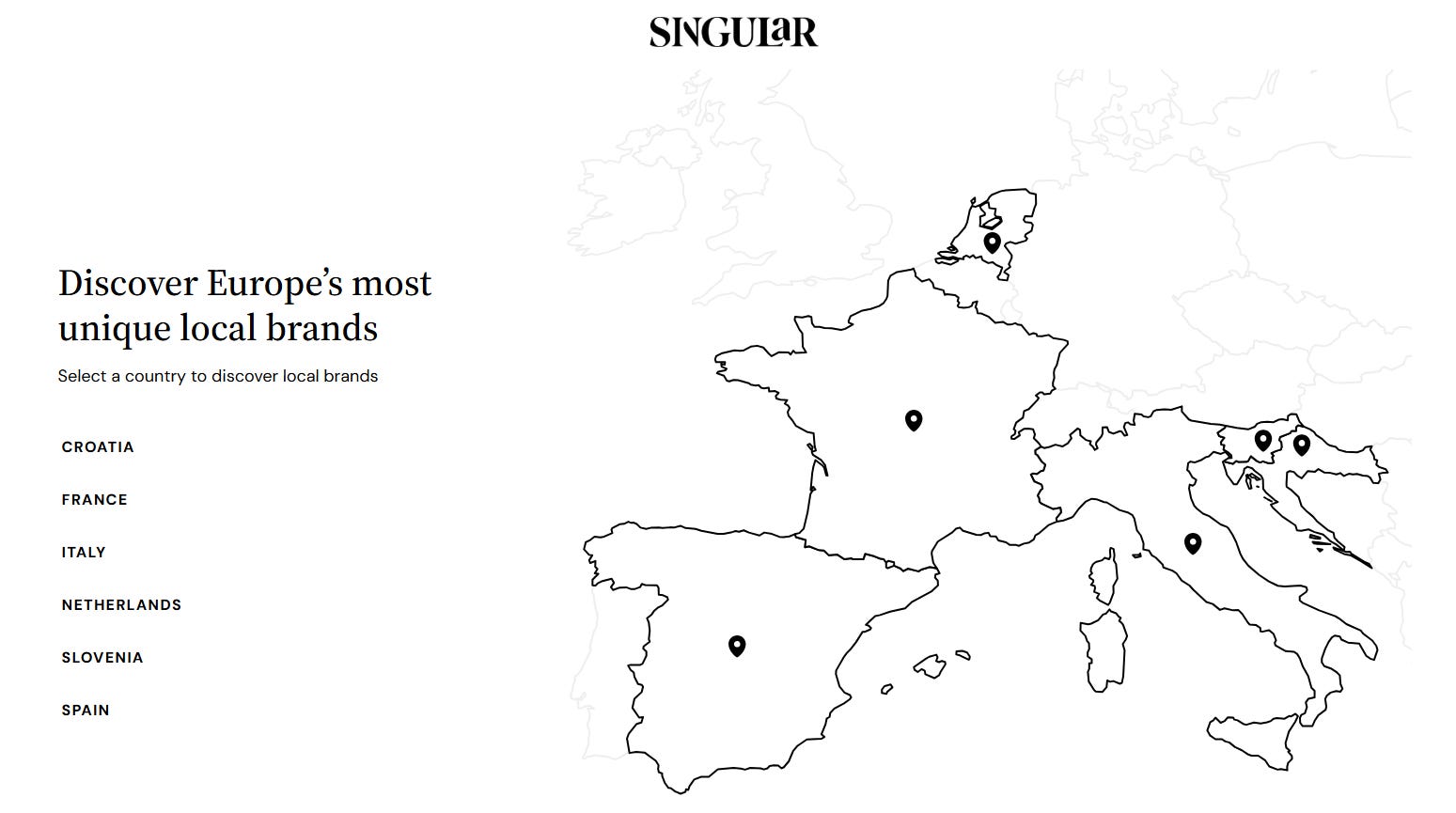
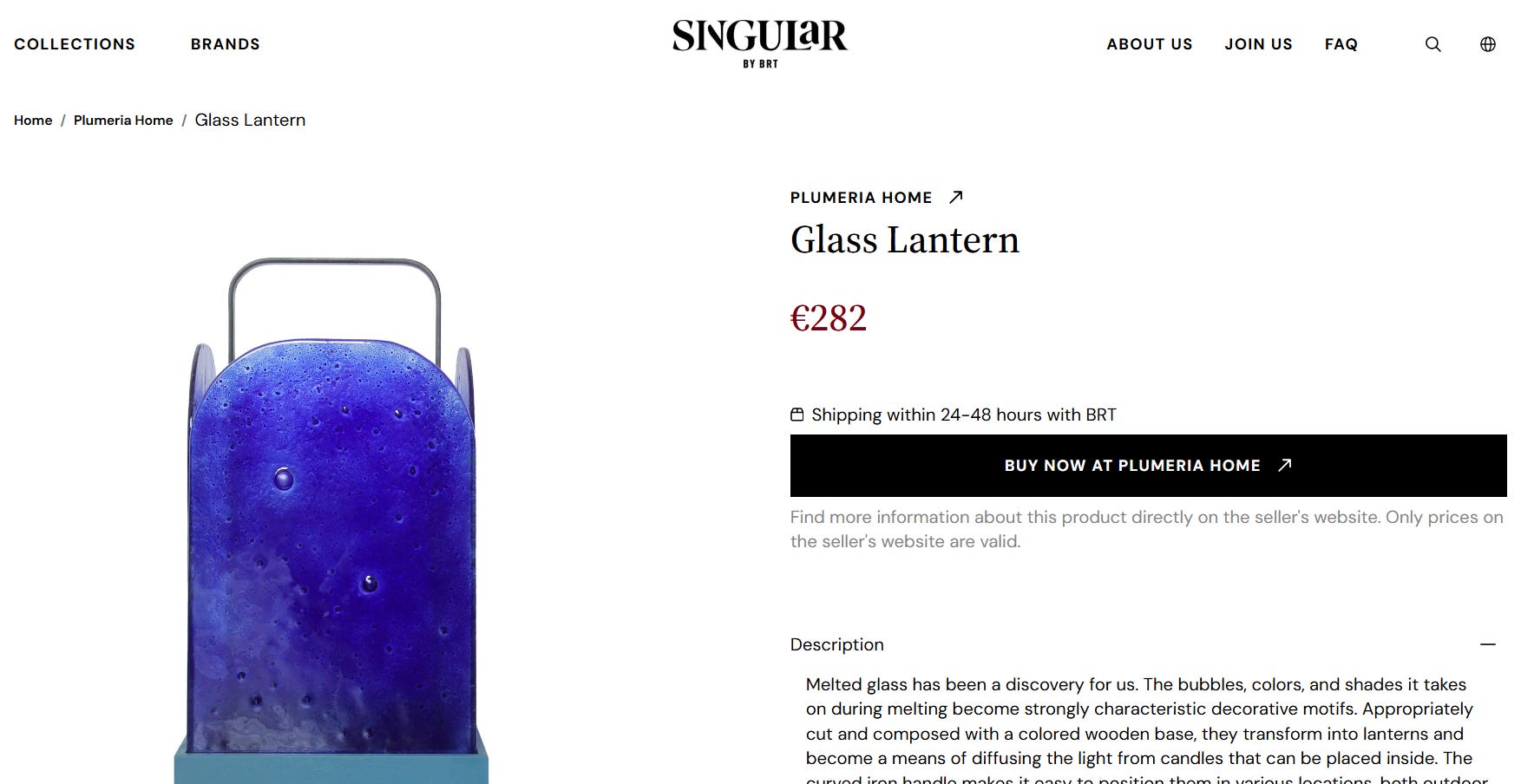
Geopost, a parcel delivery conglomerate that owns massive carrier brands like DPD, Asendia, La Poste, etc. has launched Singular, a directory for webshops of their customers in Europe.
According to Geopost it is “a digital platform designed to (1) offer consumers a new shopping experience while (2) unlocking new business opportunities for SMEs. (3) Singular provides consumers with access to unique and authentic products from selected local brands.”
The way it does this is by offering a “virtual storefront” experience which it promotes to “through Geopost’s social medias, websites and local delivery management apps, including myDPD, myBRT, miSEUR.”
The Marketplace-Directory Evolution
In the early days of the internet bubble, the first marketplaces were born and directly fought each other for dominance. Today many like Amazon and eBay thrive, while many are gone. By the 2010’s waves of internet companies that had obtained some kind of scale have tried to create marketplaces and directories on the premise that “We know a lot of merchants.”
Strategy wise this is a terrible idea. Almost all B2B vendors of any scale have a lot of customers. Knowing a lot of them provides almost no competitive advantage to build a successful directory or marketplace.
I cannot tell you how many times I have been approached be part of a new marketplace or directory project from companies in payment/fintech, logistics, SAAS, manufacturing and supply chain, and once even a packaging company!
Many have tried, all have died.
Why did they fail?
The marketplace business model has been covered and written about by people a lot smarter than me. I recommend reading “The Cold Start Problem” by Andreessen Horowitz’s Andrew Chen. However let’s just say that the critical success factors for building a marketplace-directory business includes
Managing Customer Acquisition Cost (CAC)
Increasing Average Over Value (AOV), Lifetime Value (LTV)
Reducing Churn (the inverse of which is improving retention)
It was often believed that acquiring merchants was the hardest part of running a marketplace, but it was not. Marketplaces would often say “If only I could get Nike’s on my marketplace, then users would buy from us!” But it turns out that even if you have Nike’s on your marketplace, if you are not driving significant traffic to your site, nobody will know about it.
And even if you bought enough traffic to get that visitor, convincing them to migrate from Amazon to your marketplace was hard. If you did get the first sale, hopefully not through incentives, getting them to come back as equally challenging.
Again learned 2 important things:
Acquiring customers is very expensive
Retaining them and growing AOV and LTV is very hard
There is a better strategy
Instead of creating the marketplace first, Geopost should create a consumer super tracking app, so that it can own a direct relationship with consumers. This would create:
High frequency recurring touch points (checking app daily for ecom deliveries)
Significant data on consumers (what they buy, where they buy)
These touch points become ad inventory which the Geopost could then use to serve personalized merchant ads to consumers and recommend specific purchases.
This solves the high CAC problem of obtaining eyeballs through organic tracking usage as the traffic and user acquisition tool.
User churn on a carrier’s native tracking app like Geopost or DPD would be very low, making user numbers even more attractive.
While some data science work would be needed, once they figure it out, serving personalized product recommendations to customers based on data can be very powerful.
Carrier tracking apps are not new. Carriers already have their own carrier tracking apps, but of them are going the route of Super App.
Geoposts’ strategy is not bad at all, it just needs a little fine tuning.