

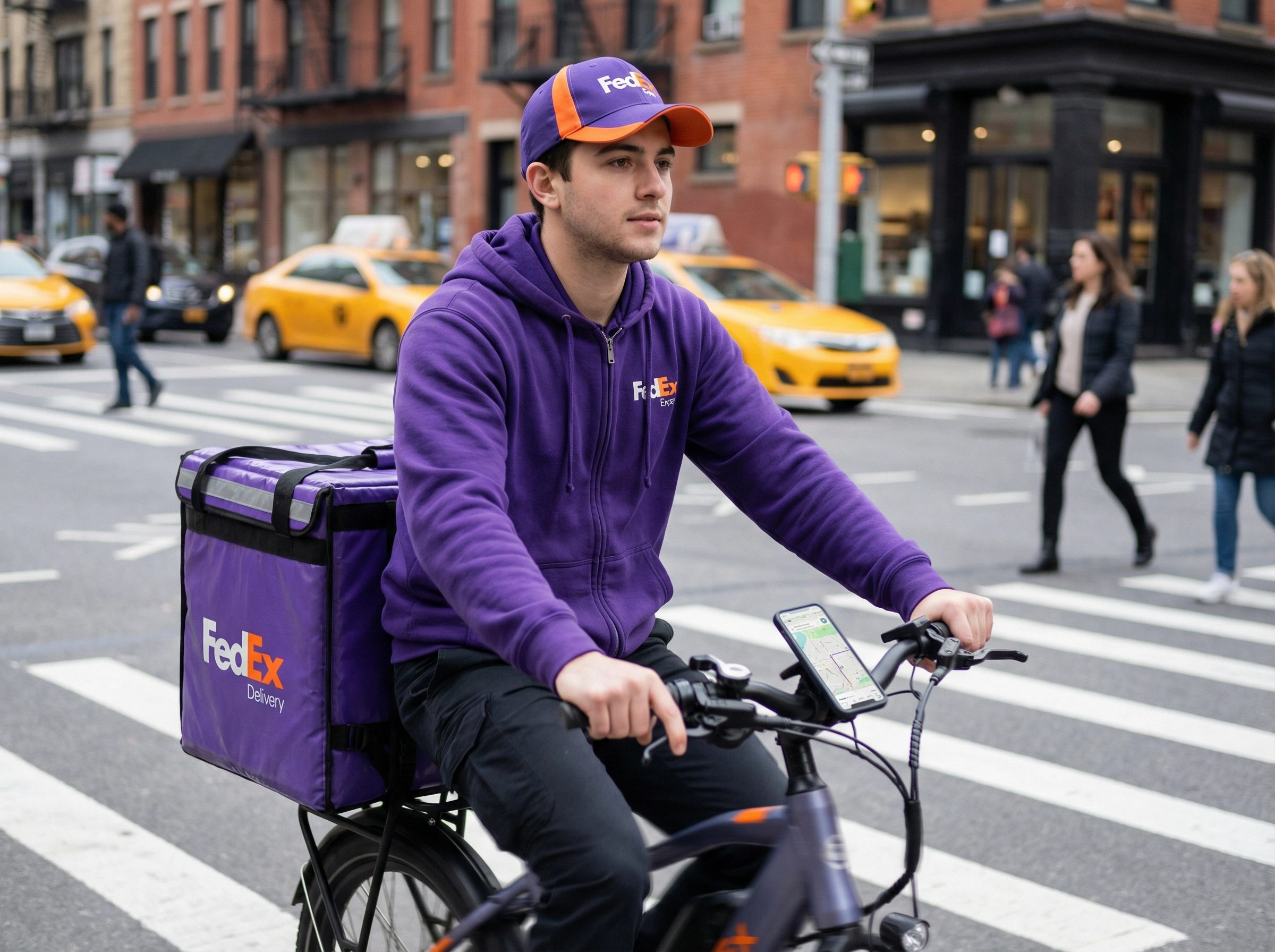
FedEx has been unstoppable lately.
€9.2B consortium acquisition of InPost which I called FedEx’s most important acquisition since TNT
Revival of Amazon as a customer, including Amazon Returns to be processed at FedEx Office
Big bet on technology including FedEx’s new Returns solutions in partnership with Parcel Lab
Analyst beating earnings announcements
All of these have sent FedEx’s stock soaring 75% in the past 12 months, allowing it to surpass UPS in market cap.
And now, FedEx has officially entered the Quick Commerce Wars with the launch of FedEx Same Day Local, an on-demand delivery service offering 2-hour delivery.
And the way it’s doing this is pretty smart. Rather that try to compete in a business that relies on both a completely different business model and alternative supply chain that FedEx doesn’t have, it has instead partnered with One Rail, a delivery orchestration startup that raised a $42M Series C round late in 2024.
How Does It Work
FedEx’s partnership appears to be a white-label or co-operated service where FedEx will utilize One Rail’s platform, which is already connected to over 1,000 other carrier companies, in order to offer instant Quick Commerce delivery.
The service is described as offering a 2-hour or end-of-day delivery. These deliveries are likely to be handled entirely through One Rail’s digital and physical infrastructure, which is likely utilizes a large number of carriers outside of FedEx’s network including numerous gig delivery platforms.
However, it’s probably going to be a fully FedEx acquired shipment and FedEx branded experience.
Quick Commerce Works Differently
Quick Commerce follows a completely different playbook from traditional ecommerce delivery.
1️⃣ Delivery-Drivers at Scale
It’s one thing to manage 10K delivery drivers in-house, it’s another to be China’s Meituan managing 7.5M delivery drivers. It’s a completely different thing, and FedEx wouldn’t be able to do this with it’s existing network.
2️⃣ Dark stores, or micro fulfillment centers
Quick Commerce in other markets, is primarily delivery groceries, daily necessities, or high frequency items like popular consumer electronics. It’s still not clear how FedEx plans to acquire this piece, or if it hopes to build this business together with major retailers.
3️⃣ Digitally native
From owning the customer acquisition, to operating the millions of drivers, and planning perfect inventory numbers across a large number of micro fulfillment centers, successful Quick Commerce businesses have to be great in tech, AI, and big data.
A Different Breed of Competitors
This is a great first step for FedEx to ensure that it’s not completely left out of the Quick Commerce game which is set to be dominated by DoorDash, Uber, Instacart, and a flew of other players with DNA in the instant delivery space
These companies are genuinely technology companies, more like Amazon than they are like UPS or USPS, and FedEx will have it’s work cut out for them in entering this space. However, it’s a segment of the market that’s too hard to ignore. Expect more partnerships soon.